Low-Light Imaging + HDR
High-sensitivity 2.4 MP low-light sensor with HDR — clean image through dawn, dusk, fog and high-contrast urban scenes.

Daylight / Day-Night Camera
SKU · AAD-CAM-UCMOS · Low-Light CMOS · Ethernet
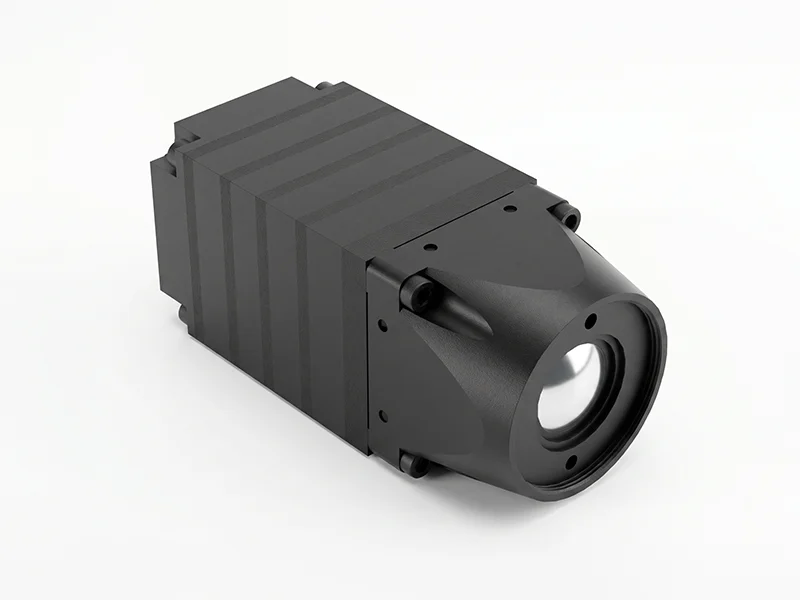
A compact 2.4 MP low-light CMOS day camera with HDR. Streams H.264 or H.265 over Ethernet — UDP/RTSP, under 50 ms — with a built-in web UI for live parameter tuning and a removable IR-cut filter for low-light work.
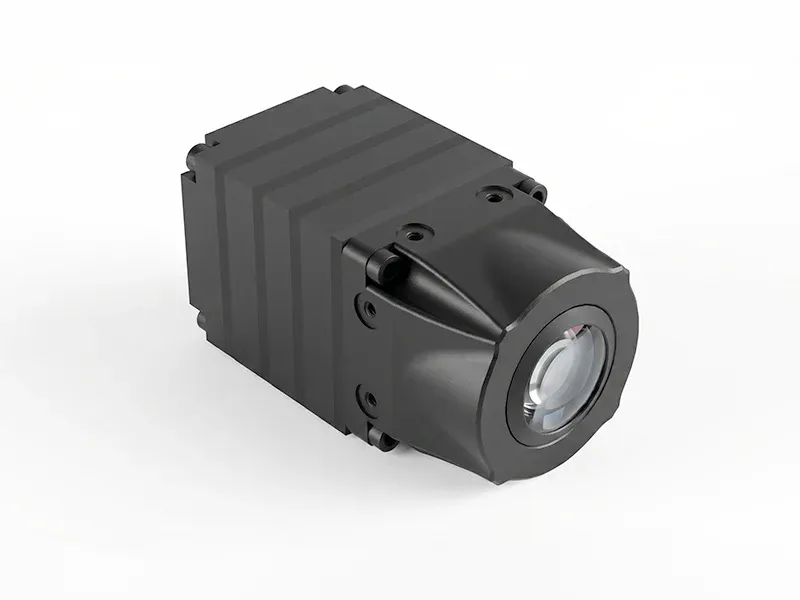
Low-Light Imaging + HDR for dawn, dusk, fog and high-contrast urban scenes — H.264 or H.265 over Ethernet at under 50 ms, with a clean native digital output and no analog step in the chain.
Core specs and the features that make UCMOS-D the daylight eye of the AAD targeting stack.
High-sensitivity 2.4 MP low-light sensor with HDR — clean image through dawn, dusk, fog and high-contrast urban scenes.

H.264 / H.265 over Ethernet — clean digital video with no analog conversion, no frame grabber, no transcoding step.

UDP / RTSP H.264 / H.265 over a single Ethernet link — no analog VTX and no transcoding step.
A target the AI can't resolve is a target it can't engage — so we don't cut corners on the glass.
Most low-cost camera lenses are only sharp in the center of the frame. Toward the edges the image softens, and detection and identification models start to miss or misclassify targets that drift away from the middle of the picture.
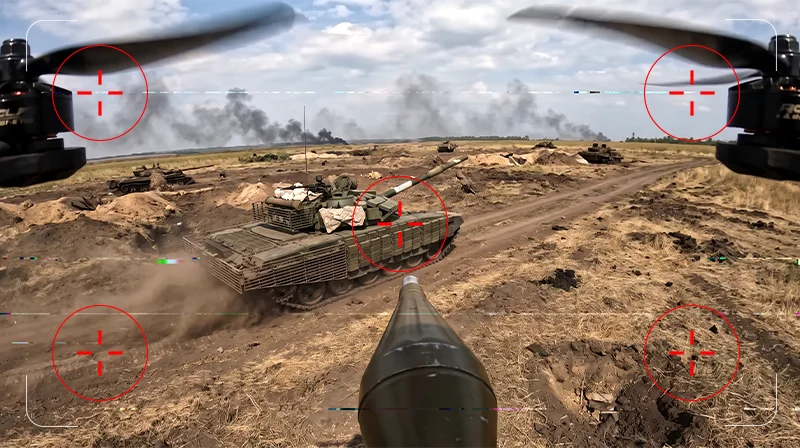
Every signature locked — corners and center.
UCMOS-D uses a high-quality lens that holds a uniform, sharp image across the entire frame. Targets are detected and identified just as reliably at the edges as they are dead-center — which matters most in the seconds before a target leaves the field of view.
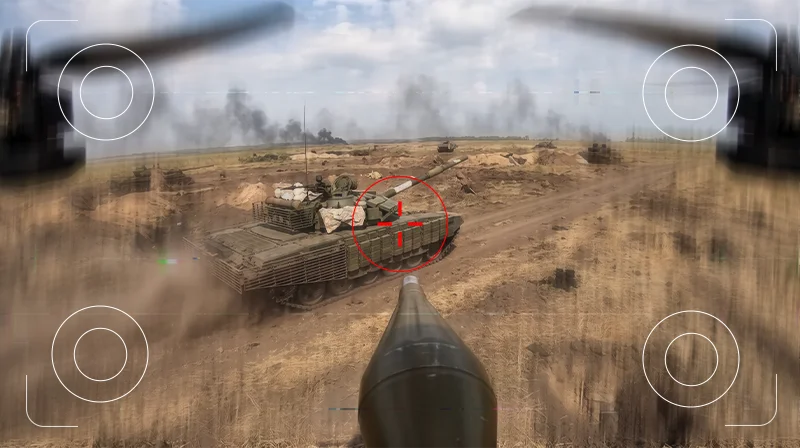
Edges soften — targets missed at the corners.
Optical and electrical specifications for the UCMOS-D — Gigabit Ethernet output.
| Detector | 2.4 MP low-light CMOS · HDR |
|---|---|
| Resolution | 1920 × 1080 |
| Pixel pitch | ~3.1 µm |
| Frame rate | 60 / 30 fps |
| Focal length | 2.5 mm |
| Aperture | F/1.8 |
| FOV (H) | 123° |
| Interface | Ethernet |
| Output | UDP / RTSP · H.264 / H.265 |
| Latency | < 50 ms |
| Power | 5–36 V · 2 W |
| Operating temp. | −20 … +60 °C |
| Dimensions | 21 × 21 × 42 mm · 40 g |
| Adjustable | Video & image parameters available for tuning — can be applied live, in flight |
A daylight sensor tuned for real-time guidance and onboard AI across strike, ISR and gimbal platforms.

Real-time terminal guidance

Daylight observation & ID

Long-endurance ISR
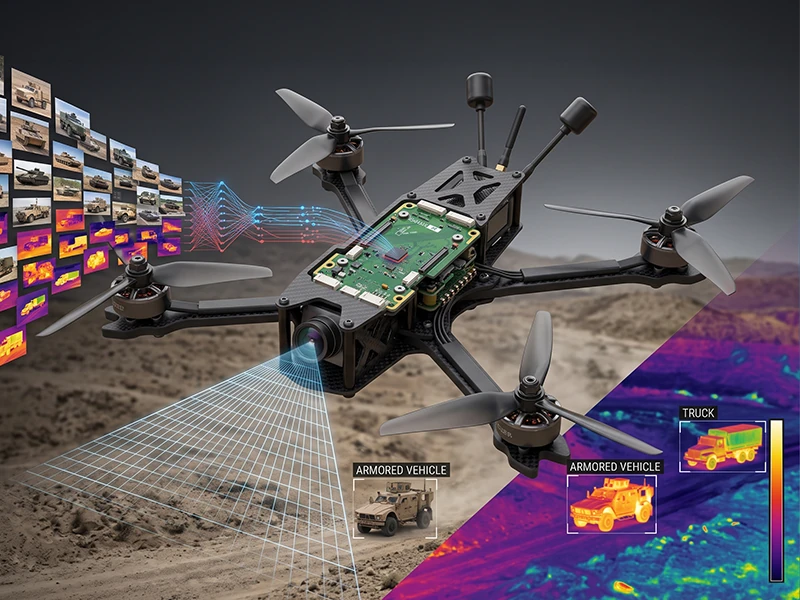
UCMOS-D isn't a camera that happens to feed an AI — it's built for ours. Wield-AI runs detection and identification on the live video, drawing a box and a confidence score around every target the model recognises.
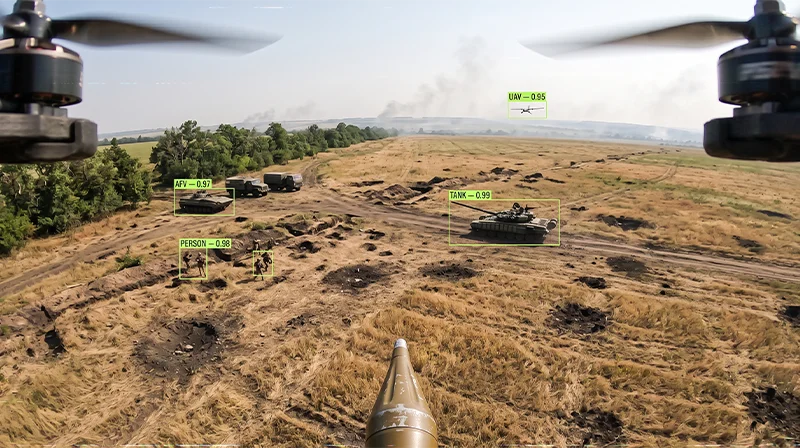
We can provide a representative sample dataset — and a fully trained model — so you can validate detection and identification before you commit.
We set the tonemapping and image tuning ourselves, calibrated to the conditions our models are trained on — not a generic factory profile.
Because we build both, sensor output and model expectations line up — stronger detection and fewer missed targets out of the box.
Technical Documentation
Stream setup, IP configuration, day/night mode switching, gimbal wiring, and the AI video pipeline — everything on UCMOS-D lives in our Technical Library.
Learn More in Our Technical Library →Built to work as one system — camera, compute and AI on a single digital stack.
A 2.4 MP low-light CMOS sensor with HDR, tuned for dawn, dusk, fog and high-contrast urban scenes, with a removable IR-cut filter for low-light work.
One native digital interface — Gigabit Ethernet, streaming H.264 or H.265 over UDP / RTSP at under 50 ms latency, with a built-in web UI for live settings. The direct MIPI CSI-2 link to an onboard compute module is a separate model, the UCMOS-MIPI.
Yes — its native digital output is built to be read directly by an onboard detection model, and it's one of the compatible cameras for the Wield-AI stack alongside EdgeNode AI and BattleCore FC7.
Yes — the UCMOS-D is NDAA-compliant and made in the USA.